A journey on which you discover Erzgebirge folk art
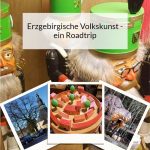
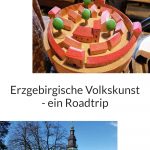
Erzgebirge folk art Seiffen is famous. Erzgebirge folk art manufacturers of candle arches, pyramids, smokers, nutcrackers and other wooden figures have im Saxony Tradition. In other words, the region in Saxony is known for the Erzgebirge wood art and its handicrafts. These belong at Christmas along the border with the Czech Republic. In the meantime, however, this folk art can also be found on Easter, birthdays and anniversaries. We visit wood carvers in Saxony and learn more about their work and tradition.
As early as the 16th century, miners used their free time or periods of unemployment to work with the region's wood. Woodcarvers in the Ore Mountains earned additional income by carving wood. Apart from that, there were miners who switched entirely to the production of miner figures, candle arches, Christmas mountains, humpback mines or nutcrackers. Later, other trades were added. These include, for example, bobbin lace making or glass blowing. There are, by the way, craftsmen in the Ore Mountains who have been practicing their profession for eight generations. The work is often passed down from father to son. Ore Mountain folk art has a long tradition.
We have therefore started looking for wood carvers, lace makers, wood sculptors and artisans in the Ore Mountains. The result is a round trip that provides an insight into life in the Ore Mountains. A journey that is not only exciting in the Advent season.
Find your accommodation in the Ore Mountains using this map
Discover Erzgebirge folk art from Seiffen
Christmas angel
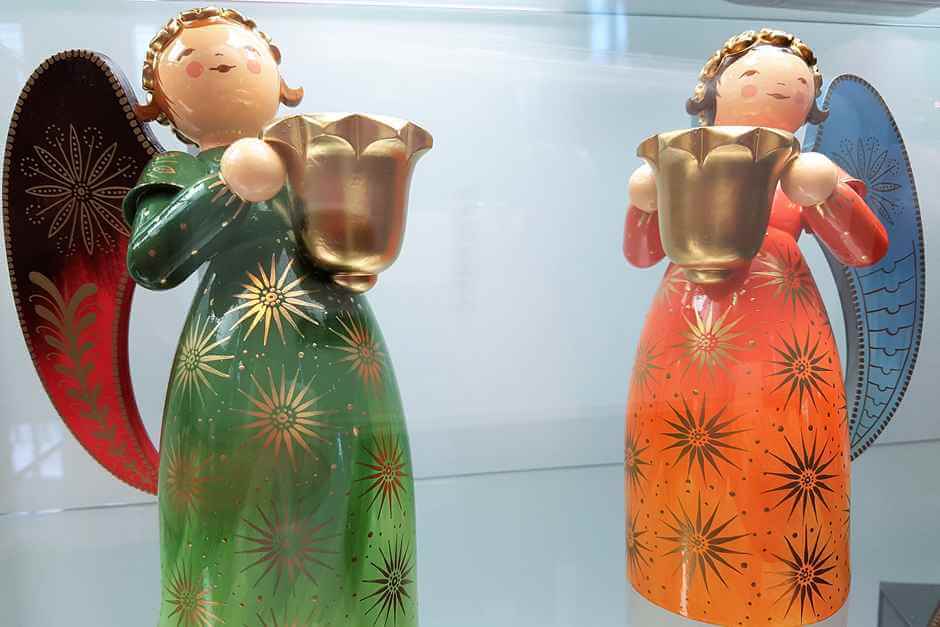
We start our journey to the Erzgebirge folk art manufacturers in Grünhainichen. The Wendt & Kühn manufactory is located there. Grete Wendt founded this company in 1915. Together with "Olly" Sommer (later Wendt) she creates the angel figures that are the reason for the success of the wood manufacturer. Since then, the angel's smile has conquered the Christmas world. Inspired by fairy tales, Grete Wendt then designs fairy tale characters. Cinderella, the Pied Piper of Hameln and other fairy tale heroes are part of the manufactory's repertoire. In the meantime, the figures also represent modern themes. What I like best is the idea of the angel who goes on a journey. However, the most popular are the angel figures. In Grünhainichen you can visit the manufactory's shop all year round.
Wendt & Kühn world
in Grünhainichen
Chemnitz street 40
09579 Grünhainichen
Tel. 0049 37294/86 128
The Wendt & Kühn world in Grünhainichen is open Monday to Sunday from 10.00 a.m. to 17.00 p.m.
Wendt & Kühn figure world in Seiffen
Hauptstraße 97
09548 Seiffen
Tel. 0049 37362/87 80
The world of figures in Seiffen is open Monday to Sunday from 10.00 a.m. to 17.00 p.m.
wheelwrights
Seiffen is not known as a toy town for nothing. Many Erzgebirge folk art manufacturers settled here. You can find Erzgebirge folk art here on every corner. Aside from the world of figures from Wendt & Kühn, there are other things to discover in Seiffen. That's why we spend a whole day with the craftsmen in Seiffen and the surrounding area.
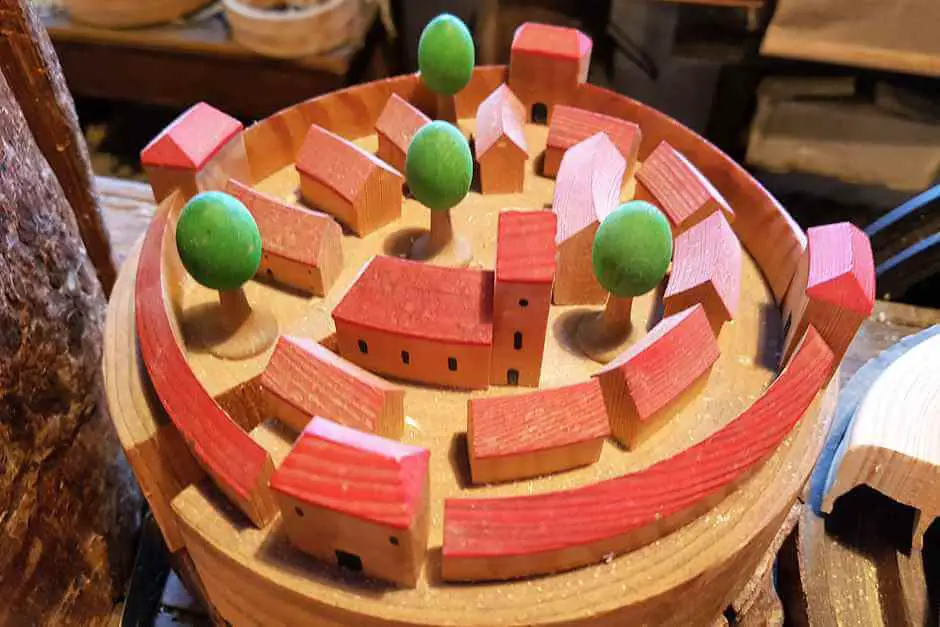
In the Seiffen open-air museum, we first visit the tire turner. First of all, we cannot imagine what his job title would be. We only know that he is one of the Erzgebirge folk art manufacturers. In his workshop, however, it quickly becomes clear what he is doing. It is located in a house from the 18th century. This stands next to a water pond on the museum grounds. So hydropower operates the machines in his turnery. With one grip on the belts, he controls their speed, stops them or makes the wheels run again.
Wooden tires are stretched out on metal brackets, which he grinds, notches or polishes. What initially looks like a procedure without a plan turns out to be a brilliant craft. After a while he takes the wooden tires off the machine and then puts them in front of him on the work table. It is still not clear what that should be. Then, however, he takes a knife and starts to split the wooden tires. "This is spruce wood," he explains. “This is the only wood that you can simply cut with a knife. Every other wood has to be sawn. "
Then he cuts a whole herd of elephants out of the wooden hoop with skilled hands. One after the other. "Each of them is unique," he says. "I cut by eye. It happens that they are of different thicknesses.
Open-air museum with tire turning plant
Hauptstraße 203
09548 Seiffen
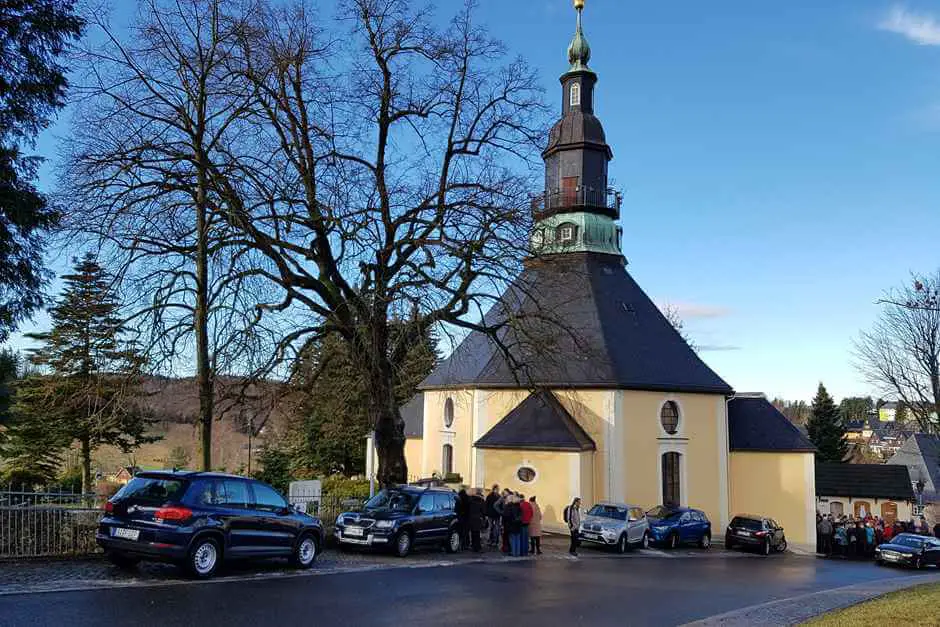
The mountain church Seiffen
Erzgebirge folk art, these are the Christmas Schwibbögen. Hardly a motif appears more often in the Schwibbögen in the Erzgebirge than the mountain church in Seiffen. Schwibbögen are now more popular as a Christmas decoration than Christmas trees. At least that's the impression we get on our nightly rides through the cities of the region. Many of the mining towns have sprung up on the steep slopes of the Ore Mountains. Therefore, the houses are often on top of each other and give a view of festively decorated windows. We see houses in which each window has its own Schwibbogen (or two). This creates a magical Christmas atmosphere in the localities. Whole cities show the mountain church Seiffen in their Christmas windows. We also discover them in the restaurant of our hotel in Sayda Forest.
Mountain church Seiffen
Deutschneudorfer Str. 4
09548 resort Seiffen
Nutcracker Manufactory - Ore Mountains folk art by hand
Because of the large crowd in front of the church, we continue to our next destination. A few kilometers outside of Seiffen is the workshop of Markus Füchtner, one of the Erzgebirge folk art manufacturers. He is already the eighth generation to make wooden figures. His ancestors were carpenters. As such, they worked on construction in the summer. By contrast, in winter they were unemployed. Instead of complaining, they made necessity a virtue. Carving knives and turning tools ultimately provided for the family's maintenance. It is therefore not surprising that Wilhelm Füchtner - the great-great-great-grandfather of Markus Füchtner - is considered to be the creator of the Seiffen nutcrackers.
Markus Füchtner also goes with the times. Instead of just making nutcrackers, he also takes on commissioned work. For example, there is a small army of decorative figures in his workshop waiting to be packed. “An order from Disneyland Paris that we have been receiving for several years now,” explains our host. “They serve as table decorations for the end of the year celebration. After the evening, the guests can take these figures with them as souvenirs. ”
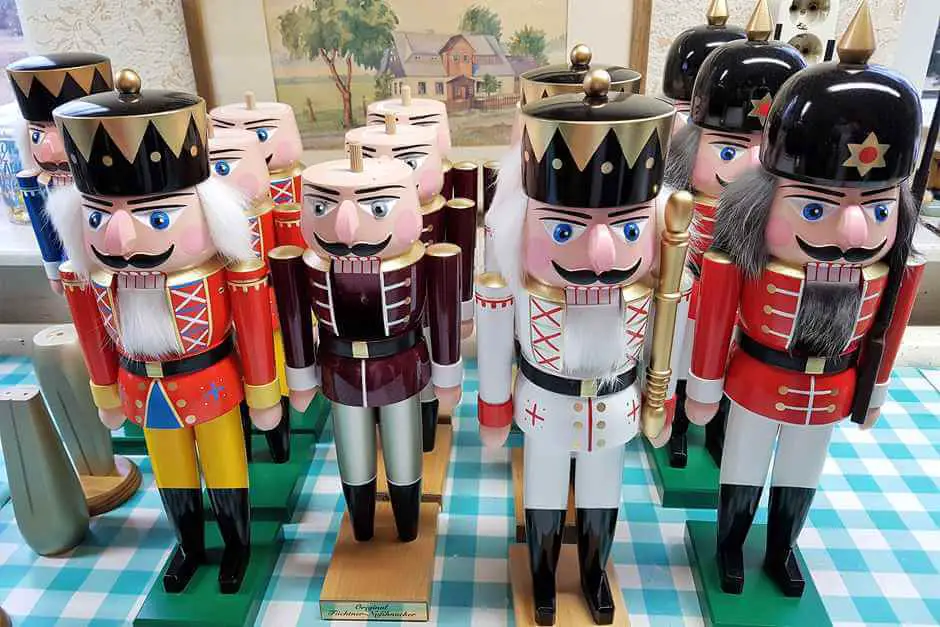
You can discover the nutcrackers and other wooden figures by Markus Füchtner in his shop in Seiffen:
Retail store High-contrast
Hauptstraße 4
09548 resort Seiffen
Do you like to travel by motorhome?
- Do you want to rent a mobile home? Then you will find information and a selection of booking options here. Or do you prefer to travel with a roof tent on the car? In addition, the overnight stay in camping tents is possible.
- Be sure to check our packing list for campers to see whether you have packed everything for your motorhome tour.
- An example of a campsite is the camping and holiday park in Seiffen. However, there are others in the region. There you can, for example, relax in one after a day trip Dutch Oven or on the portable grill . You can also find Dutch oven accessories .
- You want to know where you can stay overnight stay overnight in Germany Can you and are you looking for pitches and campsites? You can find information about this under this link.
- Why is a folding e-bike useful when camping?
Nutcracker Museum in Neuhausen - old Erzgebirge folk art
We'll see even more nutcrackers in the Nutcracker Museum in Neuhausen afterwards. This museum emerged from Jürgen Löschner's passion for collecting. He was enthusiastic about handicrafts from the Erzgebirge and the works of the Erzgebirge folk art manufacturers. So in 1966 he started collecting nutcrackers. First the grim guys who poked fun at the local authorities and their mercenaries. The oldest Seiffen nutcracker from 1870 is among them, as are the earliest nutcrackers from Swiss. Then the more modern, representing the common people. Finally, the exotic ones who embody cowboys, comic heroes or Mexican caballeros. There are now more than 5500 nutcrackers to admire in Neuhausen.
Of course, you will also find the Nutcracker Museum, the world's largest nutcracker (10,10 Meter). With hazelnuts or walnuts, this is overwhelmed. He prefers cracking coconuts. Even the smallest nutcracker in the world can be found in the museum. At 4,9 millimeter height, however, one must look for nuts that can crack this.
Nutcracker Museum
Str. 20-24
09544 Neuhausen
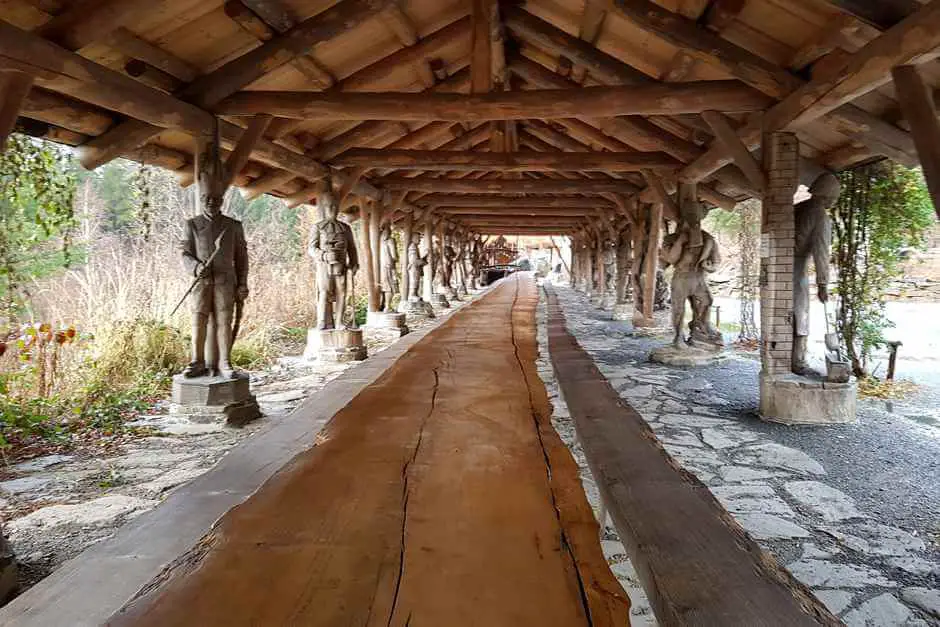
The sowing-sledge of Blockhausen - Erzgebirge folk art of the grandmaster
On the other hand, the huge wooden sculptures by Sauensäger Andreas Martin and his chainsaw friends from all over the world are very different from the fine woodwork of the manufactories. He too is one of the Erzgebirge folk art manufacturers, only in other dimensions. After the fall of the Wall, astonishing things arose in Blockhausen. In the middle of the forest, Martin built a log house village in which he pursues his passion - carving with chainsaws. This enthusiasm has now brought him around the world, where he takes part in chainsaw championships all over the world.
Do you like hiking?
- With this packing list for hikers You will definitely never forget anything on your pleasure hikes again.
- Wear comfortable walking shoes for wide feetwhere you can walk well even on rough paths
- Winter starts early in the higher elevations in the Ore Mountains. Therefore we recommend Winterstiefel to take with you on the trip.
- A large backpack is definitely practical for everything you need on the go.
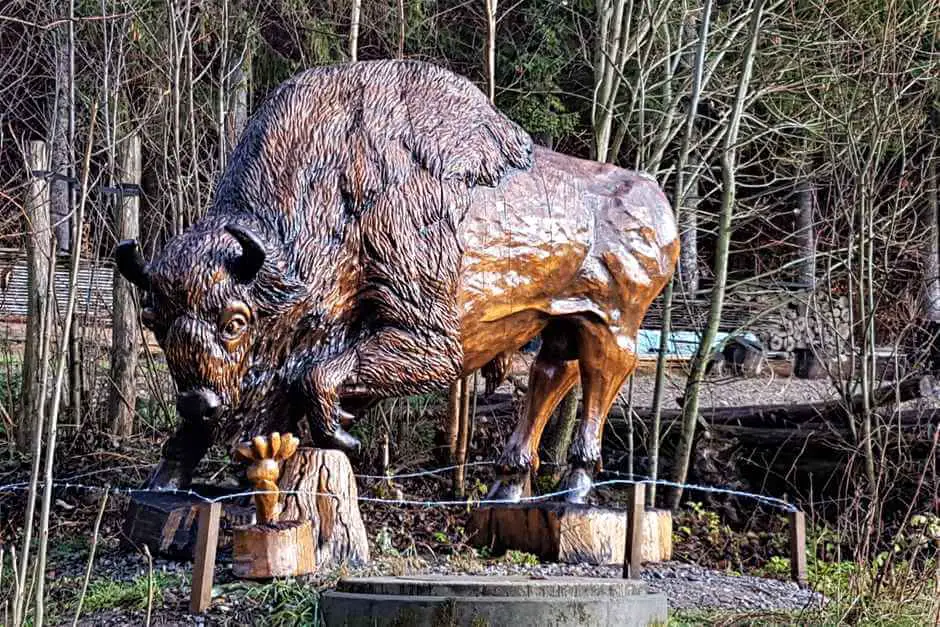
That gave him the idea: Blockhausen is now closed every year Pentecost Venue of the World Chainsaw Carving Championships. The best of the best from all over the world then gather at the longest table in the world. What is created during the Husky Cup stays in Blockhausen. Impressive wooden sculptures line the path from the parking lot to the log cabin village. You can also try your hand at chain saw carving. Martin regularly offers courses for this.
Walderlebnisdorf Blockhausen
Mordsteinweg 1
09619 village Chemnitz
After our visit we leave the region of Seiffen and continue to Annaberg-Buchholz. In the museum we get further insight into the craftsmanship of the Erzgebirge.
A Museum of Ore Mountain Folk Art - The Manufactory of Dreams
Not far from the town square is the Manufactory of Dreams. In it, the city of Annaberg-Buchholz exhibits a collection of Erzgebirge folk art. The collection is on loan from Dr. Erika Pohl-Ströher. Over the decades she has collected everything from angels and miners to nutcrackers and mass figures to toys. This created a unique presentation of Erzgebirge folk art.
Not only will I become a child there again. I keep hearing from visitors: "It reminds me of my doll's kitchen" or "Do you remember ...". A visit to the factory of dreams is not only nice at Christmas time. And it's guaranteed not just to please children.
Manufactory of dreams
Buchholzer St. 2
09456 Annaberg-Buchholz
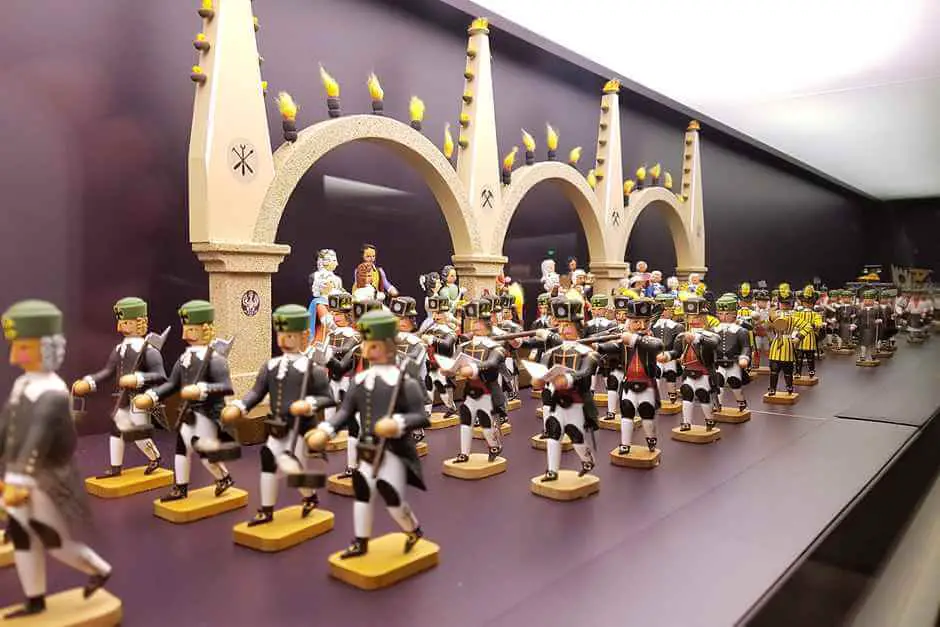
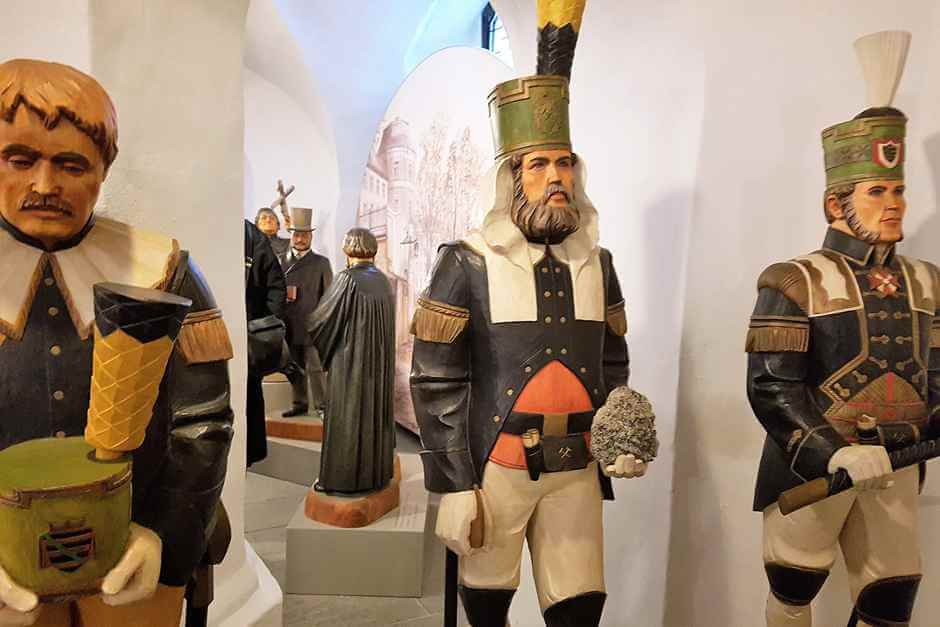
The miners' manger - today's Erzgebirge folk art
In Advent, the miners' manger in the mountain church of St. Mary shows scenes from the Christmas story. Here, life-size figures represent people from the village with their occupations. This makes the presentation of the birth of Jesus very lively. Erzgebirge sculptors have been implementing this project since 2000.
Mountain Church of St. Mary
Münzgasse 5
09456 Annaberg-Buchholz
With the Fichtelbergbahn from Oberwiesenthal to Neudorf
According to our maxim to travel slowly, we take the Fichtelbergbahn from Oberwiesenthal to Neudorf. This is a narrow-gauge railway, which is still operated by a steam locomotive. Their cloud of steam we see from afar. In addition, her hoarse whistling reminds us to be punctual. For a good hour she pulls us puffing, steaming and zuckelnd over the mountains to Neudorf. This track has already returned the track since 1897. However, we do not drive to the terminus in Cranzahl. Instead, we get off in Neudorf. There you are already waiting for us.
Station Oberwiesenthal
Bahnhofstrasse 7
09484 Oberwiesenthal
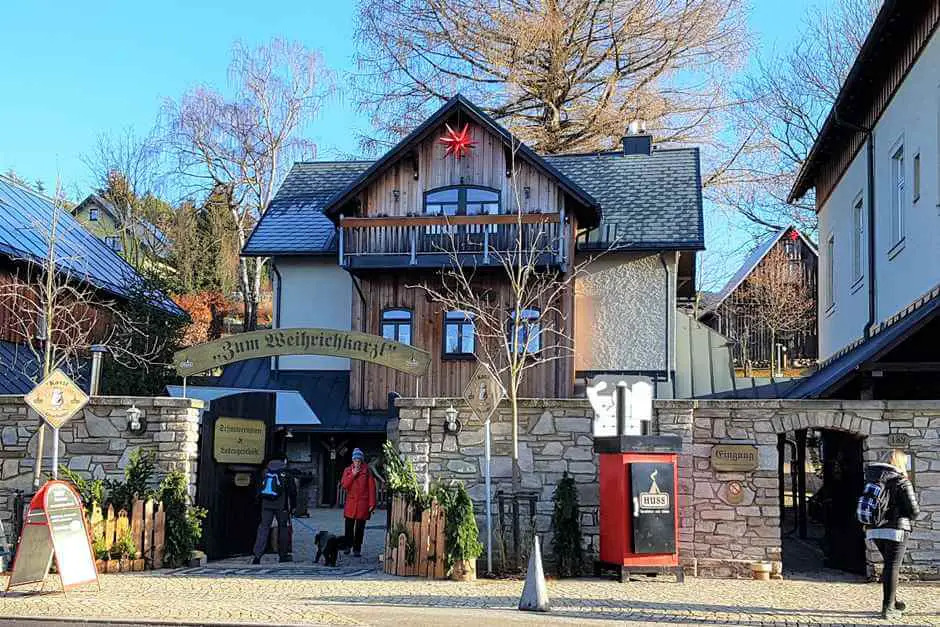
Weihrichkarzle for smokers - Erzgebirge folk art
Right next to the Neudorfer train station is a sign "Zum Weihrichkarzl" (Zum Weihrauchkerzl). There you can buy "Weihrichkarzle" or frankincense incense for incense smokers. If you want, you can watch how these are made in the show workshop. Or you can do it like the students in a German-English school class and try it yourself. One thing should be clear to you before you get involved: you don't keep your hands clean. The reason for this is the main ingredient for incense cones: charcoal. Therefore, the palms of the students will soon be carbon black. Nevertheless, they are very enthusiastic. Therefore, the first perfectly shaped "Weihrichkarzle" for smokers will soon be on their work surfaces. Depending on the fragrance added, they smell particularly good when lit.
To the Weihrichkarzl
Karlsbader Str. 187 / 189
09465 Sehmatal
The Soup Museum
After a quick lunch in the "Leffelstub" that I covered in our post Saxon specialties we have a stopover in the second attraction of Neudorf. Opposite the Weihrichkarzl is the Soup Museum. There you have collected everything that has to do with the cooking of soups. Kitchens spanning three decades, including one from the GDR era, show how life in the village has changed. Soups in Neudorf are so popular that the place now even calls itself Suppendorf.
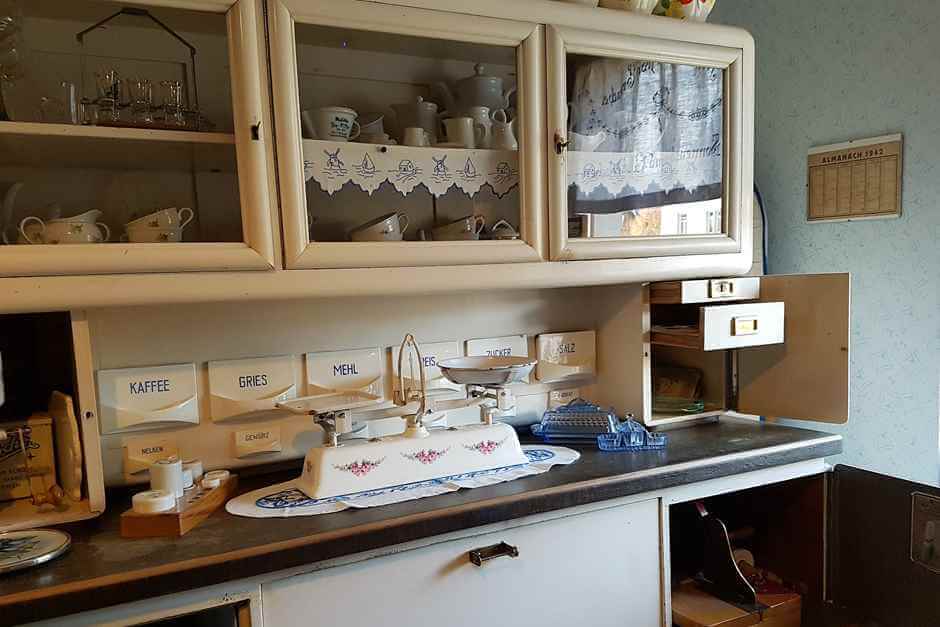
Every year in October the place celebrates the fair in the soup country. Then soups are cooked for what it takes. There is a soup competition, the participants of which bring home cooked soups. A jury made up of locals, guests and professionals will then evaluate them. The winner's recipe ends up in the museum's collection of soup recipes. In 2018, the beetroot soup won.
In addition, the visitors of the soup fair have a lot of fun with the soup pot pulling. This works like the Fingerhakeln in Bavaria. Only that the Saxon soup pot pulling not the ankles are used. Here competitors are fighting for a soup pot, which they have to pull on their side. A lot of laughter is guaranteed.
Neudorfer Soup Museum
Karlsbader Str. 164
09465 Sehmatal
Erzgebirge folk art - bobbin lace
At the end of our round trip to the craftsmen of the Erzgebirge we visit Heike Lautner in Oberwiesenthal. She is Klöpplerin and operates the Wiesenthaler Klöppelstub, a craft shop specializing in lace making. Here she sells her own creations and offers bobbin lace lessons.
It shows us how lace works. "You pull the strings together," she describes her work. I can imagine that there is a lot more to it than that. However, I cannot see this because her hands work with the clappers so quickly that I find it difficult to follow their movements. Skillfully and quickly she turns the fine yarn between her fingers. This creates magical lace work under her hands. Her specialty is lace making, which she incorporates into wooden frames and wooden figures.
"I get the wooden frames delivered," she explains. “They are particularly popular with visitors in Oberwiesenthal. They like to buy them as Souvenirs. “Heike Lautner learned the craft as a child. “That's why I'm so quick to make lace. I taught my mother. It doesn't make it so quickly. "
Wiesenthal bobbin stub
Markt 10
09484 Oberwiesenthal
Conclusion: an experience of a special kind - Erzgebirge folk art
This concludes our Erzgebirge folk art journey to the craftsmen in the Erzgebirge. We discovered many surprising things, but also experienced a lot of tradition. Erzgebirge folk art is definitely something special. But even more so are the people who carry on this art. Passion is just as important as skill. But also a spirit of innovation and motivation, and we discovered plenty of that in the traditional Erzgebirge. We were most impressed by the people who are carrying this legacy of Erzgebirge life into the future. We would like to thank you for the welcome and the exciting insights into a world that we had not known until then.
Travel Arrangements:
Parking at the airport
Here you can reserve your parking space at the airport.
Arrival by plane, car, bus and train
Compare and book flights here*. (Advertisement) The nearest airport is in Prague or Dresden. It is also possible to arrive by train. From there you can continue by train, bus or by
Car Rentals:
Cheap car hire - book quickly and easily!
Hotels in the Ore Mountains:
Accommodation in the Ore Mountains * You can book through our partner booking.com, for example. You can also find hotels in the locations in the article.
If you book through one of these offers, we receive a commission, which we use to run this blog.
By the way: suggestions for Vacation in Germany by car here.
Do you like folk art? Then take a look here:
Do you know this?
- Packing list winter vacation
- Finance Holiday - Travel Blogger Tips
- Crafts and design
- Manufactories and producers
- Water features in Kassel
- Kassel sights
- Balloon Museum Gersthofen
- Saxony travel destinations
Source Folk Art: On-site research for Folk Art Seiffen. We would like to thank Erzgebirge eV for the invitation to this trip. However, our opinion remains our own.
Text Volkskunst Seiffen: Copyright Monika Fuchs and TWO
Photos Folk Art Seiffen: Copyright Monika Fuchs and TWO